Windows
Window Cleaning Through Canberra's Seasons
Most Canberra homes need the outside of their windows cleaned two to four times a year: after spring pollen, after summer dust or smoke, and after the autumn leaves, with winter condensation the job on the inside.

By ACT Gutter Vacuum
Last updated · 9 sources
- 2 to 4Outside cleans a year for most homes
- Late springThe one clean to do if you only do one
- Jul to DecTree then grass pollen season
Most Canberra homes need the outside of their windows cleaned two to four times a year. Each season leaves something different on the glass: pollen in spring, dust and sometimes smoke in summer, leaf stains in autumn, and condensation and wood smoke film in winter. If you only clean once a year, do it in late spring, after the worst of the pollen.
That range is our own advice from the job, not an official rule. Where your home sits in it depends on your trees, your street and how high your windows are.
Spring: pollen
Canberra's pollen comes in two waves. ANU researchers describe a tree pollen season that usually runs from mid-July to October, starting with cypress pines, followed by grass pollen from October to December. On warm, windy days it coats cars, outdoor furniture and windows in a fine yellow film.
Spring is also when Canberra is windiest: the long-term Bureau of Meteorology records for Canberra Airport show the strongest afternoon winds in September and October. Wind carries pollen and dust onto the glass, and the first light shower turns it into streaks.
That's why we suggest the main clean of the year in late spring, once the grass pollen has eased. Clean too early and November's pollen undoes the work.
Summer: dust, storms and smoke
Hot, dry weeks and northerly winds bring dust, and Canberra's summer storms add splashes of dirt and leaf matter thrown up against the glass.
Bushfire smoke is the other summer problem. In the summer of 2019-20, ACT Health warned of heavy smoke and very poor air quality across Canberra, and the ACT's State of the Environment report records fine particle levels on 1 January 2020 around 25 times higher than hazardous levels. Smoke leaves a grey film on glass that rain doesn't shift.
Hail is rare but serious. In January 2020 a hailstorm across Belconnen, Acton and the inner south broke windows and skylights. After any big storm, it's worth checking the glass and the seals before you think about cleaning.
Autumn: leaves and tannin stains
Canberra's older suburbs are full of deciduous street trees. In the inner south, around three in five street trees are deciduous, and in Gungahlin about three in four. The leaf fall is heavy enough that ACT City Services runs extra street sweeps from April to September.
Wet leaves stuck to glass and sills leave brown tannin stains, and leaves pile up in window tracks and along the sills. A clean in late autumn, once most of the leaves are down, clears the glass for winter and is a good time to empty the tracks.
If your street has deciduous trees, your gutters will be full at the same time. Our guide on how often to clean gutters covers that timing.
Winter: frost, condensation and wood smoke
Canberra Airport records close to 60 days a year at or below 0 °C, most of them from June to August, with July averaging around 16 frosty mornings. Cold glass and warm, damp air inside mean condensation.
Condensation is an inside-the-window problem. Water runs down the glass and sits on the sills and in the frames, and if it stays there, mould grows on the seals and in the corners. The ACT Government's advice is to wipe condensation off walls and windows when it happens, air the house when you can, use extractor fans in kitchens and bathrooms, and let the sun in.
Outside, the ACT State of the Environment report names wood heaters as the main source of fine particle pollution in the cooler months. That smoke settles as a dull film on glass, especially on streets where several houses burn wood.
Winter is a good time for the inside clean: glass, frames, sills and the mould-prone corners.
Flyscreens and tracks
Flyscreens trap dust, pollen and cobwebs, and every time it rains or the wind blows, some of that ends up back on the glass. Cleaning the glass without the screens doesn't last long.
Tracks collect leaves, dust and dead insects, which make windows and sliding doors stiff and wear out the rollers. Window maker Statesman Windows suggests cleaning rollers and screens three to four times a year.
When we clean windows, the tracks and sills are vacuumed and wiped as part of the job.
Keeping them clean between cleans
A few habits stretch the time between cleans:
- Clean on a cloudy day or in the shade. In direct sun, water dries on the glass before you can wipe it, and leaves streaks.
- Dust before you wash. Brush cobwebs and loose dust off frames, sills and screens first, or you'll turn them into mud on the glass.
- Use very little detergent. A few drops in a bucket is enough. Too much leaves a film that attracts dust.
- Squeegee, then dry the edges. Work from the top down, wipe the blade after each stroke, and finish the edges with a lint-free cloth.
- Wipe condensation in winter rather than letting it dry on the glass and run into the frames.
- Keep gutters clear. Overflowing gutters spill dirty water straight down the windows below.
The windows you can't reach safely from the ground or a low step, leave to us. A fall from a ladder isn't worth a clean pane.
How often, by home
- Single-storey home, few trees, quiet street: outside twice a year, late spring and late autumn. Inside once or twice.
- Home under big trees or on a deciduous street: outside three times: after spring pollen, mid-summer and after the leaf fall.
- Busy road, building site nearby, or a dusty block: outside four times a year.
- Two-storey home: the same as above, but high windows are where most people stop doing it themselves.
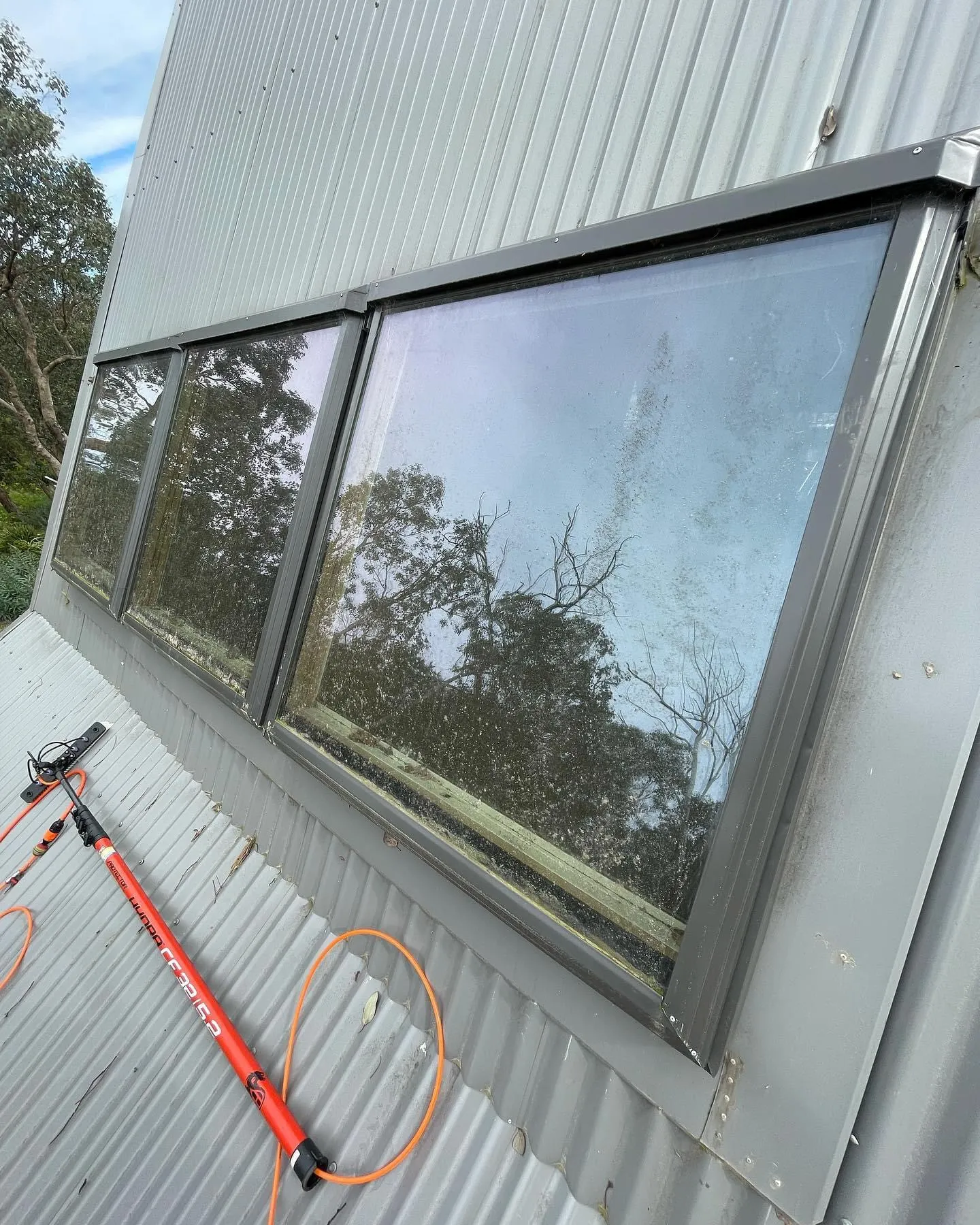
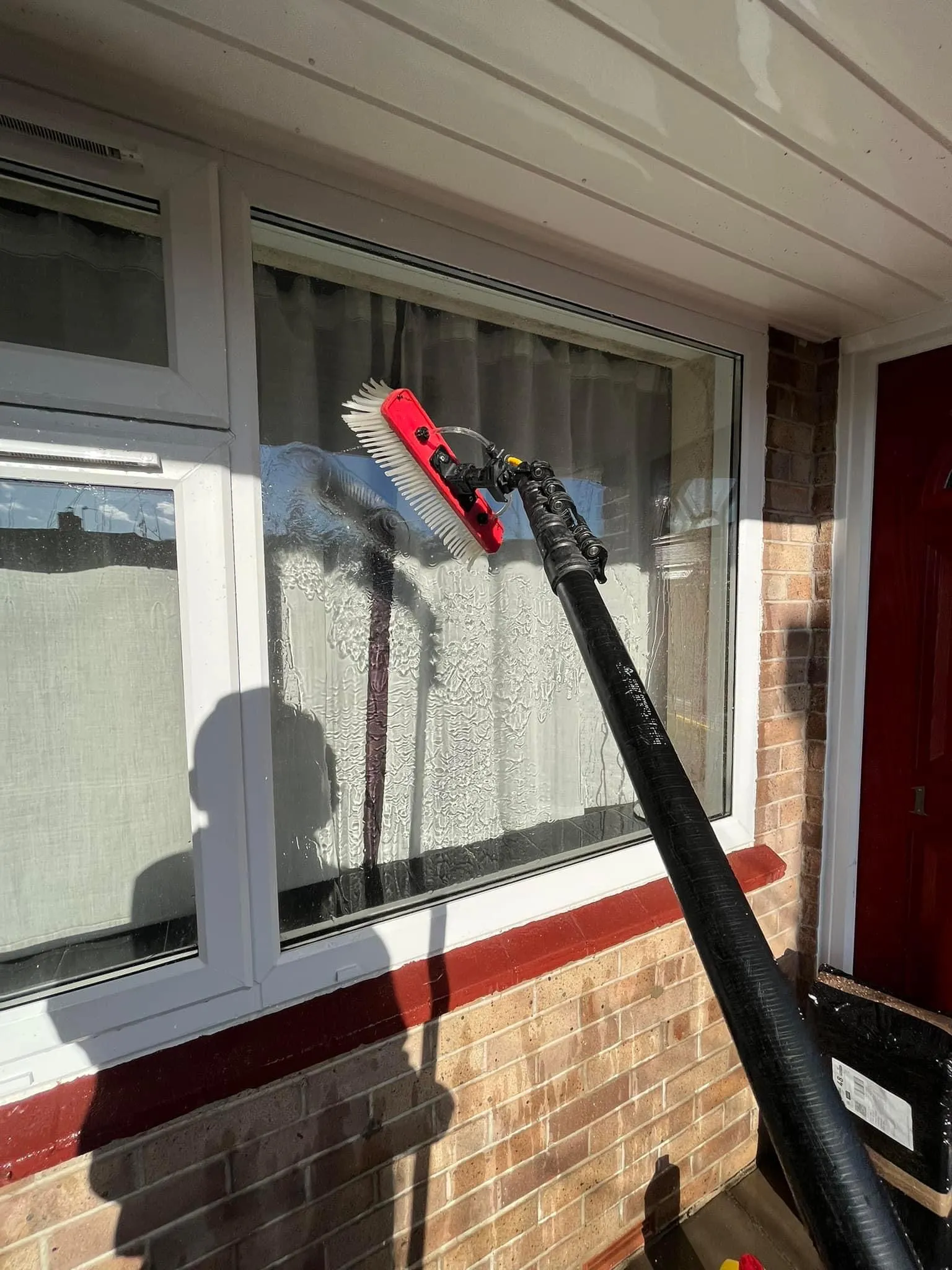
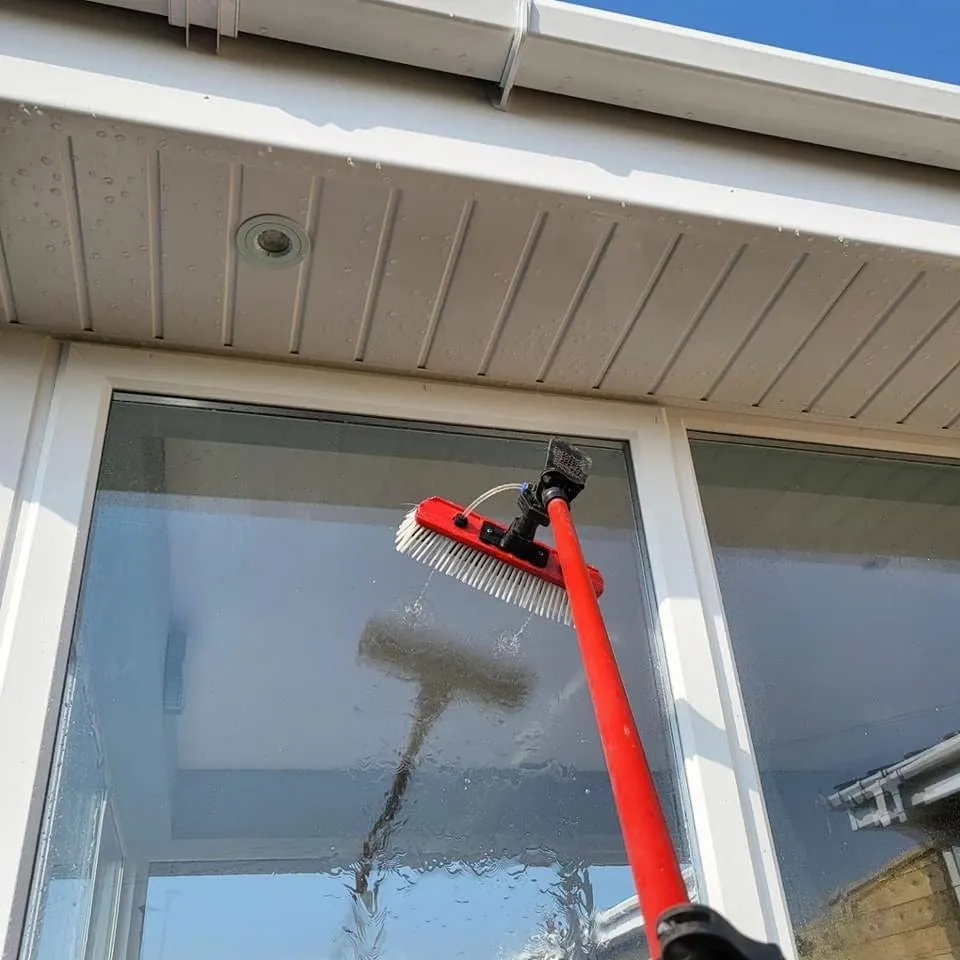
We clean the outside with a water-fed pole and purified water, which reaches second-storey windows from the ground and dries without spots, and the inside by hand. Our window cleaning page has the details, and if you have solar panels, we can clean them in the same trip.
Frequently asked questions
For most Canberra homes, the outside two to four times a year and the inside once or twice. Homes on busy roads, near building sites or under big trees sit at the top of that range. There's no official rule; this is what we see on the job.
If you only do it once, late spring, after the pollen has settled and before summer. If you do it twice, add late autumn, once the leaves are down.
Tap water carries dissolved minerals, and when the water dries on the glass the minerals stay behind as spots. That's why we rinse with purified water, which has the minerals taken out and dries clear.
Yes, at the same time. A dusty flyscreen dirties the glass behind it every time it rains or the wind blows, and dirt in the tracks makes windows stiff to open.
Sources
- Australian National University, The trees that make you sneeze (2022).
- Bureau of Meteorology, climate statistics for Canberra Airport and Canberra Airport Comparison.
- ACT Health, Health alert: air quality deterioration across the ACT from smoke.
- ACT State of the Environment 2023, Air.
- ACT Government, Mould and condensation.
- Australian Institute for Disaster Resilience, Hailstorm, ACT, January 2020.
- ACT City Services, Street sweeping.
- Statesman Windows, Care and maintenance.
- Unger, Pure water cleaning system.
Windows due for a clean?
Outside glass with a water-fed pole, inside by hand, and the tracks and sills done too. Ask for a free quote.