Driveways and paths
Pressure Cleaning Driveways and Paths in Canberra: What to Know
Pressure cleaning lifts moss, lichen and grime off shaded concrete and pavers. Take care with soft pavers and sealed surfaces, expect to top up joint sand, and keep the runoff out of the stormwater drain.
By ACT Gutter Vacuum
Last updated · 12 sources
- 1500 psiOr less for concrete pavers (Midland Brick)
- 1000 psiAround the limit for clay pavers (Littlehampton Bricks)
- Rain onlyNothing but rainwater may go into the stormwater drain
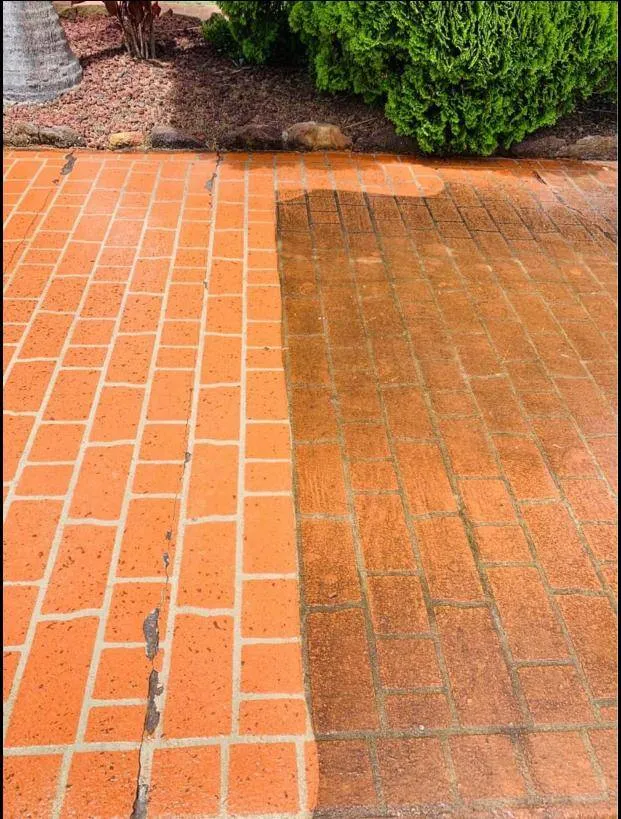
Pressure cleaning is the quickest way to lift the black grime, moss and lichen that builds up on Canberra driveways, paths and pavers, especially on the shaded side of the house. Plain concrete and exposed aggregate take it well. Clay and concrete pavers, sandstone and sealed surfaces need a lower pressure and more care, and paver joints often need their sand topped up afterwards.
Two ACT rules apply. You can pressure clean paved areas at any time under the water rules, but anything other than rainwater going into the stormwater drain is an offence, so detergents and the loosened grime stay out of the gutter.
What builds up on Canberra driveways
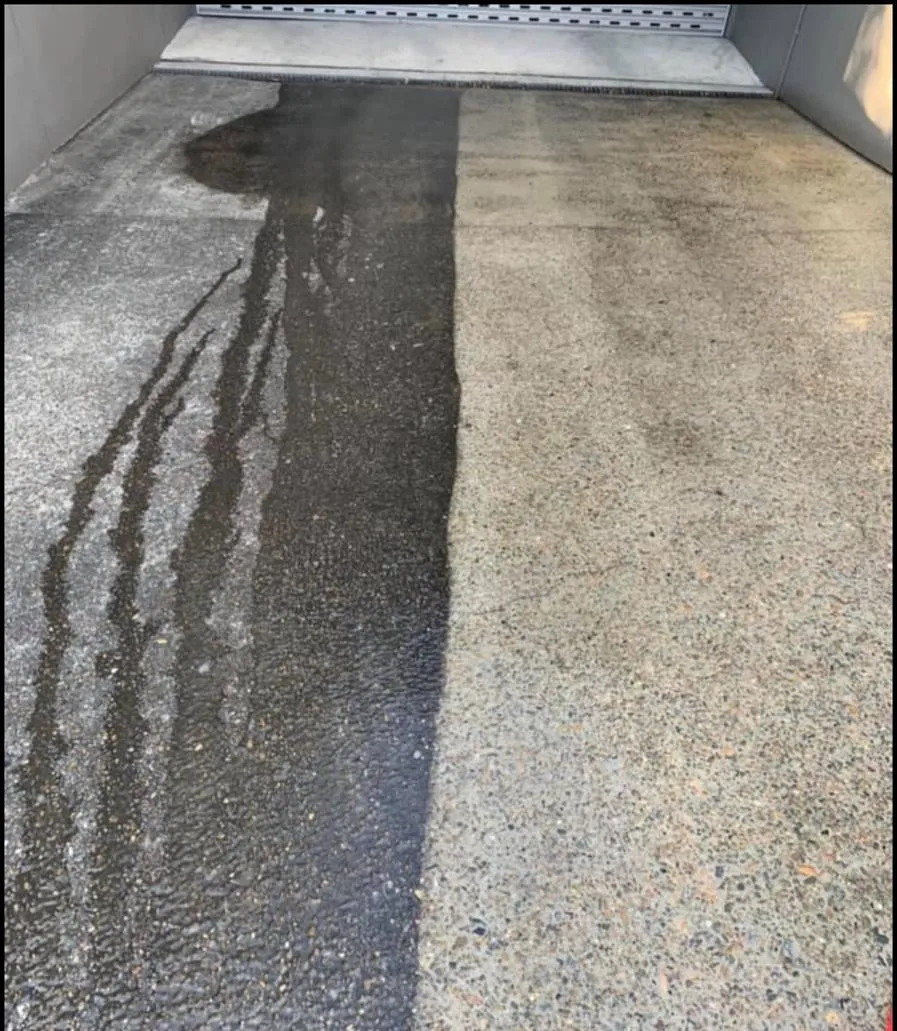
Moss, algae and lichen. They grow where a surface stays damp: the south side of the house, under trees, beside fences and walls. The Royal Horticultural Society notes growth is faster in shady areas with poor air circulation. Canberra's winters help them along: the long-term Bureau of Meteorology records for Canberra Airport show about 5 hours of sunshine a day in June, against more than 9 in December, and close to 60 frosty mornings a year. A shaded path can stay damp for days at a time.
Black grime. Dirt, tyre marks and mould build up into a dark film, most of all where cars park and where water runs across.
Leaf stains. Gum leaves and the autumn drop from deciduous trees leave brown tannin marks when they sit wet on concrete.
Oil and rust. Drips under the car and rust marks from pot plants or garden furniture.
Pressure cleaning lifts the first three well. Oil and rust stains go deeper and usually fade rather than disappear.
Concrete, pavers and exposed aggregate
Different surfaces take different amounts of pressure:
- Plain concrete is the toughest. It handles a higher pressure, but a narrow jet held close can still leave stripes or wear the top surface. A rotary surface cleaner gives an even finish.
- Exposed aggregate also takes higher pressure, according to Kärcher's guide for Australian homes. Most exposed aggregate is sealed, and Dulux's guidance for its sealer is to reseal about every two years.
- Concrete pavers need a moderate setting. Midland Brick advises 1500 psi or less for pavers and warns that a high-powered commercial machine on full pressure can damage the surface.
- Clay brick pavers are gentler again: Littlehampton Bricks puts the limit for clay masonry at around 1000 psi.
- Sandstone and natural stone are soft. Use low pressure, a wide spray, and test a small patch first.
- Sealed surfaces of any kind can lose their sealer under too much pressure. Test a patch first.
Apex Masonry, another Australian paver maker, goes further and advises against high-pressure cleaning of pavers altogether. That's a fair warning for anyone using a narrow jet, and it's why the setting and the tool matter as much as the machine.
Surface cleaners, joint sand and sealing
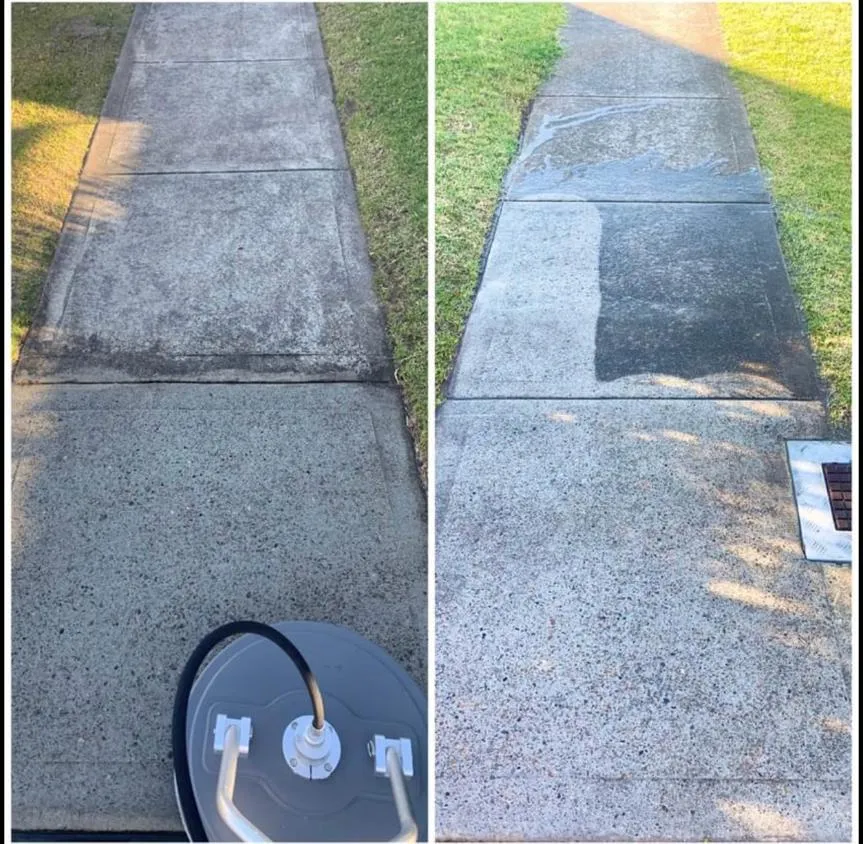
Surface cleaners. A rotary surface cleaner is a round hood with spinning jets inside. It holds the jets at a fixed height, so the clean is even across the whole area, with no stripes, and it keeps most of the spray contained.
Joint sand. Pavers sit on sand, with sand in the joints between them. Pressure cleaning washes some of it out, along with the weeds and moss growing in it. Once the pavers are dry, sweep fine jointing sand back into the joints. Leaving them empty lets pavers shift and weeds return.
Sealing. Sealing concrete, exposed aggregate or pavers after a clean makes the next clean easier and slows moss and stains. It needs a fully dry surface, so it's done on a separate day.
Water use and runoff: the ACT rules
Water use. Under the ACT's Permanent Water Conservation Measures, you can clean paved areas at any time with a bucket and mop or a high-pressure low-volume cleaner. A pressure washer is exactly that: a pump that raises the pressure and cuts the flow from a trigger nozzle. Hosing a driveway down with an open hose isn't allowed, except to clean up after an accident, fire, health hazard or other emergency.
Runoff. Canberra's stormwater isn't treated. The ACT Government's healthy waterways program notes there is no treatment plant for the stormwater system, so whatever goes down the street drain ends up in the lakes and creeks. The ACT EPA's position is that it's an offence to let anything other than rainwater enter the stormwater system, and the ACT's water quality policy names detergents and oil among the pollutants to keep out. The same program names leaves washed into drains as a source of phosphorus in the lakes.
In practice:
- Don't use detergents, bleach or degreasers where the water will run to the street.
- Sweep up the moss, grime and leaves that the clean loosens, rather than washing them into the gutter.
- Let the water soak into lawn or garden where you can.
DIY risks
Hiring a pressure washer for the weekend is common, and the mistakes are common too:
- Stripes and swirl marks from a narrow jet moved unevenly. They show up once the concrete dries.
- Too much pressure on pavers or stone, wearing the surface and blasting out joint sand.
- Lifted sealer on sealed surfaces.
- Water and grit sprayed onto walls, windows and doors, or forced under door seals.
- Slips. Wet, mossy concrete is slippery, and the spray can cut skin.
If you do it yourself, start on the lowest setting, use the widest fan nozzle, keep the tip moving and well back from the surface, and test a corner first.
What a clean lifts
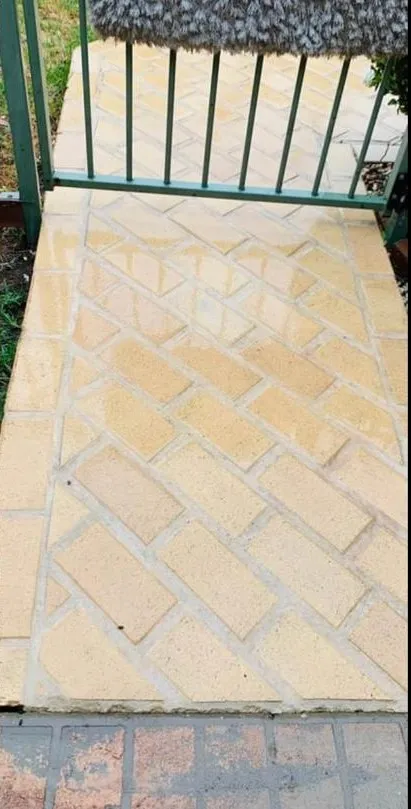
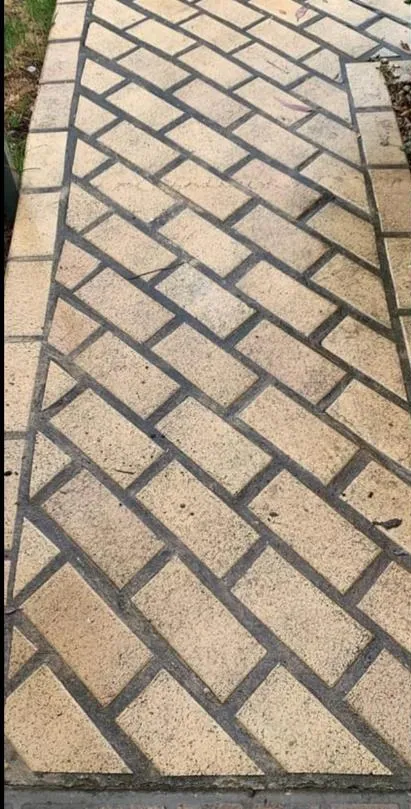
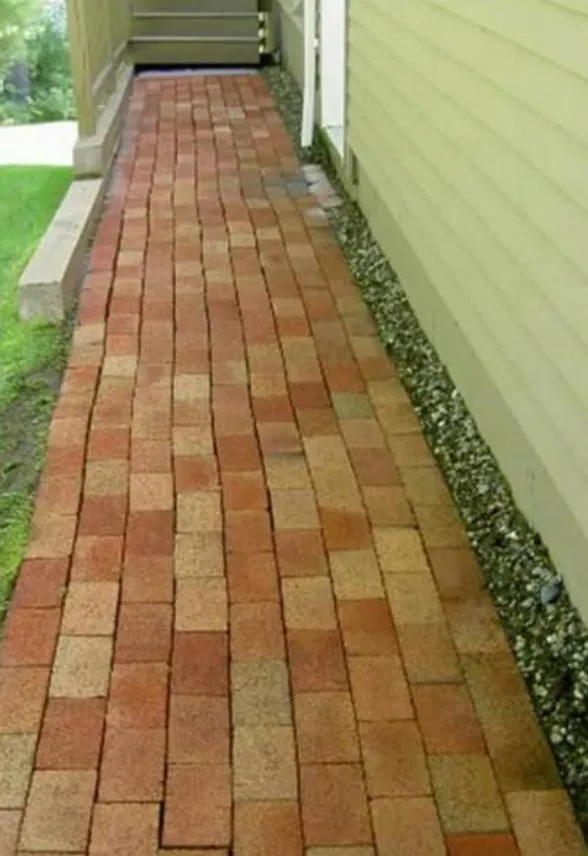
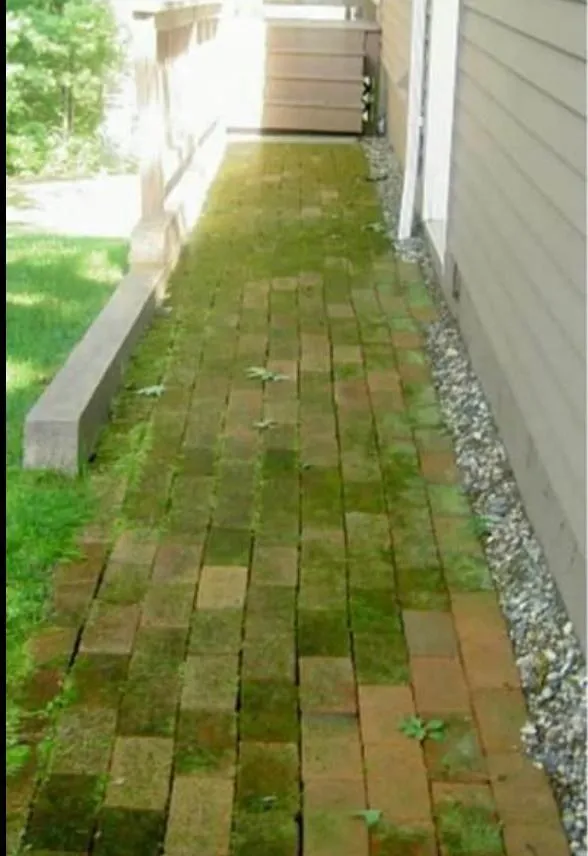
Two of our jobs. Drag the slider to compare.
When to call someone in
Call a pro for large areas, long driveways, sealed or natural stone surfaces, two-storey walls, or when you'd rather not risk stripes on a driveway you'll look at every day.
We clean driveways, paths, pavers and patios with a commercial pressure washer and a rotary surface cleaner. We set the pressure to the surface and test a patch first on anything soft or sealed. If your gutters are due as well, we do them first, so nothing washes down onto a freshly cleaned path. Our pressure cleaning page has the details.
Frequently asked questions
Yes. The ACT's permanent water conservation rules let you clean paved areas at any time with a bucket and mop or a high-pressure low-volume cleaner, which is what a pressure washer is. What you can't do is hose a driveway down with an open garden hose, except to deal with an accident, fire or health hazard.
Not with anything but water, and ideally not even that. In the ACT it's an offence to let anything other than rainwater into the stormwater system, and it isn't treated: whatever goes down the drain ends up in the lakes and creeks. Sweep up the loosened grime, and keep detergents and degreasers out of the gutter.
It can if the pressure is too high or the jet is held too close. Paver makers such as Midland Brick advise keeping pressure moderate, and clay brick pavers need a gentler setting again. Joint sand often washes out and needs topping up afterwards.
On a sunny driveway, a year or more. On a shaded south-facing path, moss and algae can start coming back within a season or two, because the conditions that grew them are still there.
Sources
- Icon Water, Permanent Water Conservation Measures: rules for residents.
- ACT Legislation Register, Utilities (Water Conservation) Permanent Water Conservation Measures, DI2010-279.
- ACT Legislation Register, Environment Protection Regulation 2005.
- Access Canberra, Water quality environment protection policy.
- ACT Government, Healthy Waterways program.
- Royal Horticultural Society, Algae, lichens, liverworts and moss on hard surfaces.
- Kärcher Australia, How to clean your driveway, patio and pavers.
- Midland Brick, Cleaning pavers.
- Littlehampton Bricks, Cleaning pavers and bricks.
- Apex Masonry, Maintaining and cleaning landscaping products.
- Dulux Avista, Concrete sealer for exposed aggregate.
- Bureau of Meteorology, climate statistics for Canberra Airport and Canberra Airport Comparison.
Driveway looking tired?
We clean driveways, paths, pavers and patios, with the pressure set to suit each surface. Send us a photo and we'll quote it free.