Downpipes
Blocked Downpipe: Gutter Problem or a Job for a Plumber?
If the gutter overflows but the downpipe still drains at the bottom, the blockage is in the gutter or the top of the downpipe. If water backs up out of the ground, it's in the underground pipe, and that's a plumber's job.
By ACT Gutter Vacuum
Last updated · 7 sources
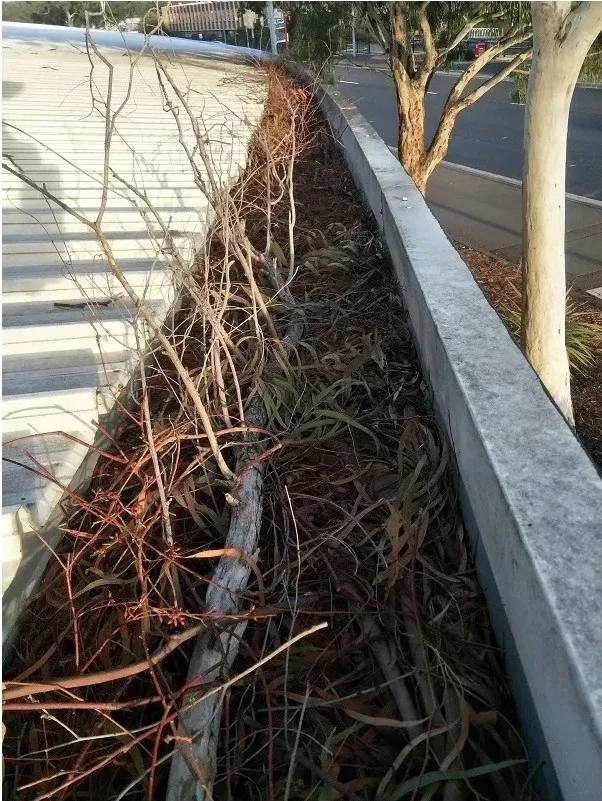
- OutletWhere most blockages sit: the gutter meets the pipe
- Hose testRun water in near the outlet and watch where it stops
- GroundWater backing up out of the ground means a plumber
Watch where the water goes the next time it rains. If it spills over the gutter but the downpipe still runs out at the bottom, the blockage is in the gutter, the outlet or the top of the downpipe, and a gutter cleaner can clear it. If water backs up out of the ground at the foot of the downpipe, or bubbles out of a grate in the yard, the blockage is in the underground stormwater pipe, and that's a job for a plumber.
Most blocked downpipes we see in Canberra are the first kind: leaves and gum bark jammed in the outlet where the gutter meets the pipe.
How to tell where the blockage is
You can usually work it out from the ground, in the rain or with a garden hose. Here's what each sign points to.
The gutter overflows along its whole length, and the downpipe barely runs. The outlet is blocked, or the gutter is so full of leaves the water can't reach it. This is the most common one, and a gutter clean fixes it.
The gutter overflows near one corner, and that downpipe is dry. The blockage is in the outlet or high up in that downpipe. Leaves and bark wedge where the pipe bends at the top.
The downpipe runs, but slowly, and the gutter overflows in heavy rain. The pipe is partly blocked somewhere down its length. Usually still a gutter cleaner's job.
Water shoots out of a joint or the bottom of the downpipe, or spurts out of the ground around it. The vertical pipe is fine, but the water can't get away underground. That's the stormwater pipe below ground.
A grate or pit in the yard fills and overflows in rain. Also an underground problem.
If you're not sure, a garden hose helps. Run water into the gutter near the outlet. If it disappears down the pipe and comes out freely, the downpipe is clear and the problem is up in the gutter. If it backs up in the pipe, look at where it stops.
What we clear
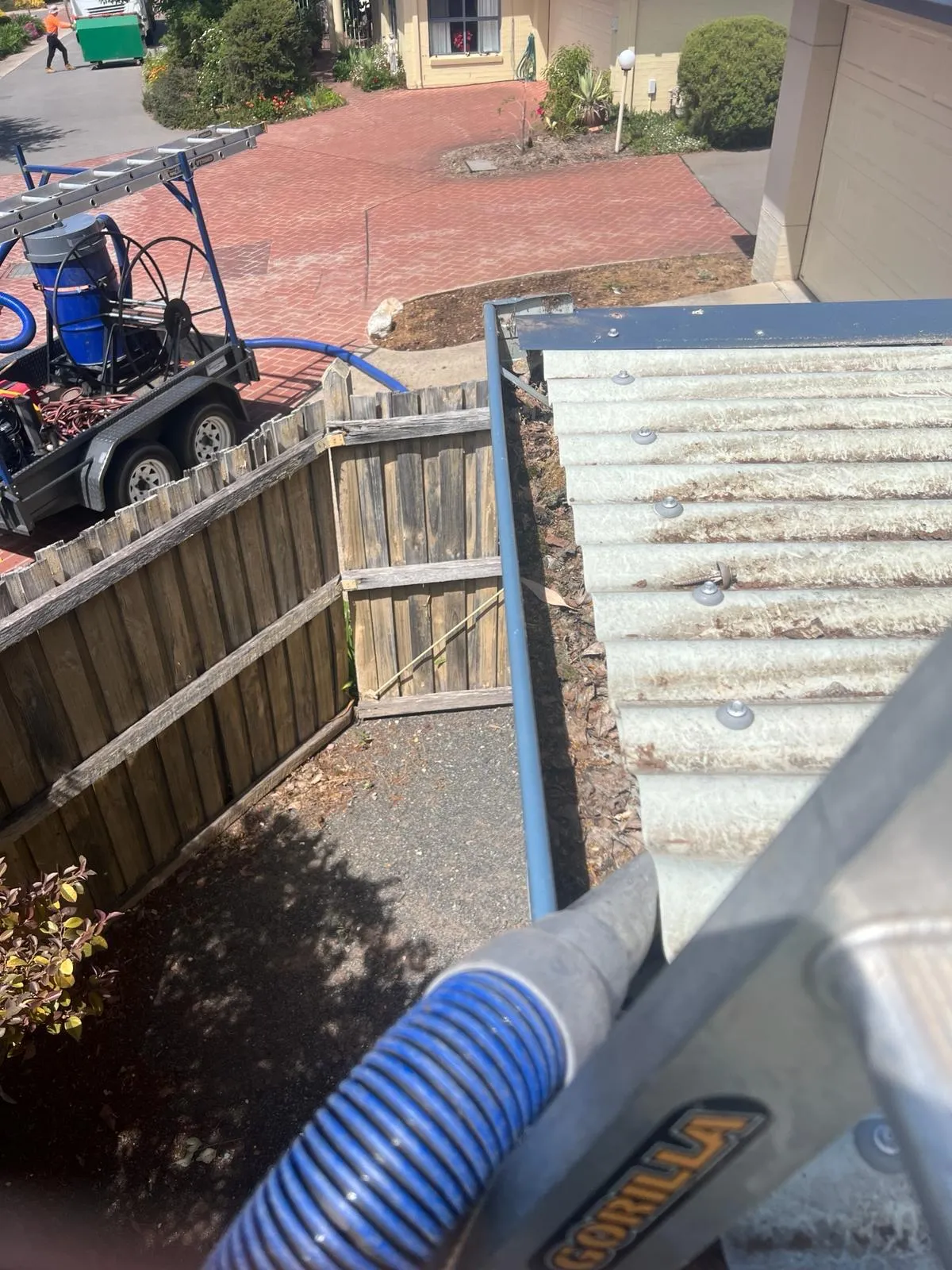
Everything from the roof down to where the downpipe goes into the ground:
- The gutters, every run, vacuumed clean, so the water can reach the outlets.
- The outlets, where the gutter drains into the downpipe. This is where most blockages sit.
- The downpipes, cleared from the top and flushed through with water so we know they drain.
We check every downpipe on every gutter clean, and if one is blocked we can usually clear it then and there. That's the most common way we unblock them: as part of a gutter clean, not as a separate call-out.
When it's a plumber's job
Below the ground, the downpipe joins your property's stormwater pipe, which carries the water to the street or the stormwater main. When the blockage is down there, it needs a plumber with drain-clearing gear and usually a camera to see inside the pipe.
Common causes underground:
- Tree roots. Roots find their way into pipe joints and cracks, then grow until the pipe blocks. ACT Government guidance names roots, cement and dirt among the causes of blocked stormwater ties.
- Broken or sunken pipes. Old clay pipes crack and joints shift as the ground moves. Once a pipe has collapsed, clearing it won't last; the section needs replacing.
- Silt and debris washed down over years, especially where a pipe has a low spot.
If water comes back up out of the ground, call a plumber rather than us. A gutter clean won't fix it, and we'd rather tell you that before we come out.
Who is responsible for stormwater pipes in the ACT
In the ACT, the line is your boundary. City Services says it plainly: blockages above the stormwater tie are the property owner's responsibility, and the ACT Government is responsible for blockages below the tie point.
The tie is where your private stormwater pipe joins the public network, either a stormwater main or the kerb. Some blocks have a riser at the boundary: a capped pipe you can open to look in. If there's water standing in the riser, the blockage is likely on the government side. If the riser is empty, it's likely on your side.
What to do:
- Call a plumber for a blockage on your property.
- If the plumber finds it's past your boundary, they expose the tie point and call Access Canberra on 13 22 81 to arrange an inspection.
- If it turns out to be the government's responsibility, you can be reimbursed for the cost of having the tie exposed.
Icon Water runs Canberra's water and sewerage, not the stormwater. Its blockage pages are about sewer pipes. In Queanbeyan and the NSW towns, check with Queanbeyan-Palerang Regional Council.
What happens if you leave it
A blocked downpipe rarely fixes itself. Every rain adds more leaves on top of the blockage, and the water that should go down the pipe goes somewhere else:
- Over the front of the gutter, down the walls and onto the garden beds and paths below. You'll see streaks on the walls and wash-outs in the garden.
- Over the back of the gutter, into the eaves and the wall cavity. The Queensland Government's guidance on gutter overflows warns that water getting back into the eaves can damage walls, ceilings and floors, and cause rot and corrosion over time.
- Against the house. Water pooling around the footings soaks into the ground there. An older ACT Government guide notes that ponding around foundations can rot timber floors and, in clay soils, lead to cracked walls.
A gutter full of wet leaves is also heavy. Over time it pulls the brackets loose and the gutter starts to sag, which leaves water sitting in it permanently.
Clearing a downpipe is a short job. Repairing water damage isn't.
Stopping it happening again
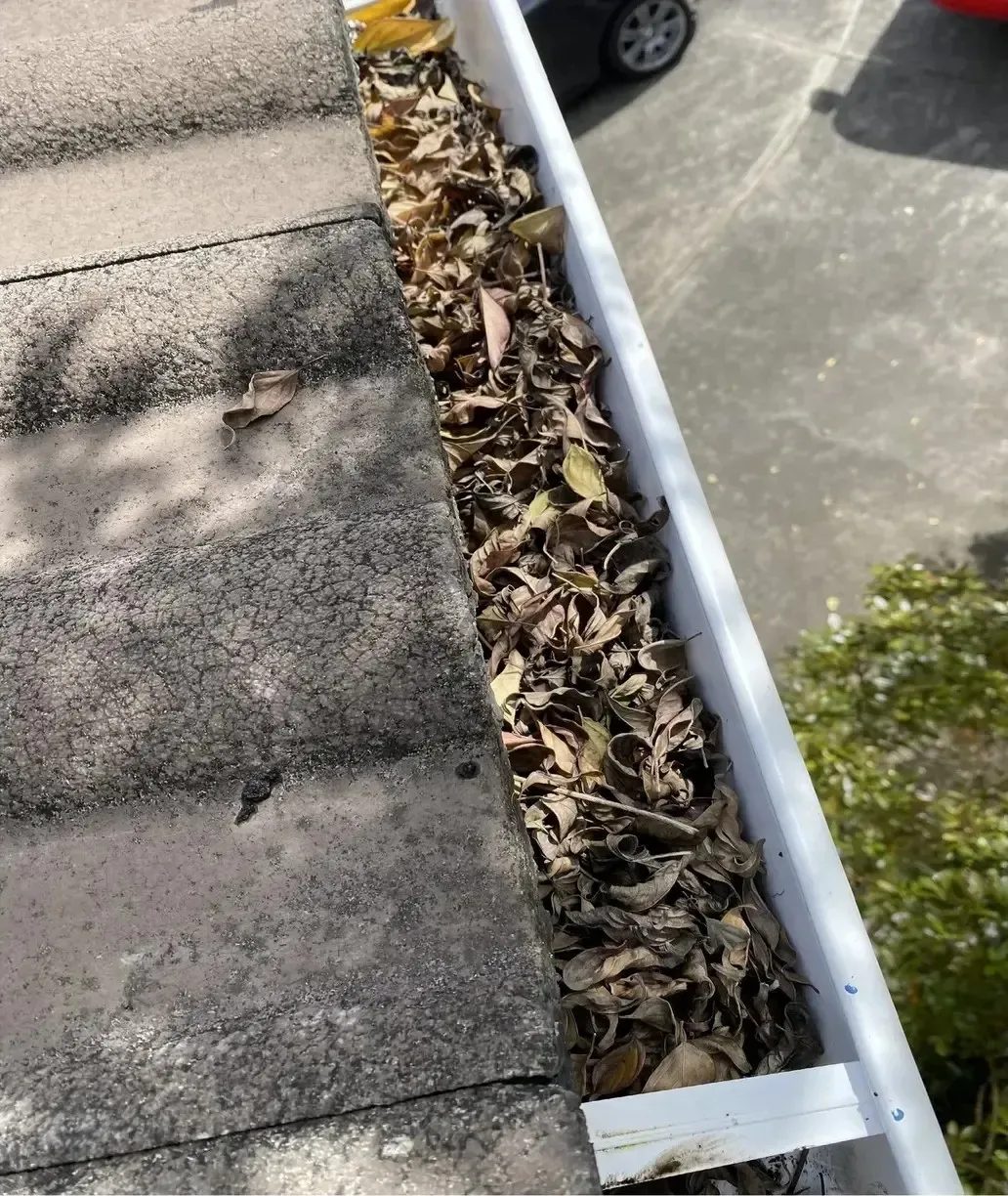
Most downpipe blockages start as leaves in the gutter, so the fix is keeping the gutter clear:
- Regular gutter cleans. At least twice a year in most of Canberra, more under gum trees. Our guide on how often to clean gutters explains the timing.
- Gutter guards. Metal mesh keeps most leaves out of the gutter and the downpipes. The ACT Government notes guards still need regular checking.
- Leaf strainers at the top of each downpipe stop leaves going down the pipe. They do need clearing, or the water spills around them.
- Check after rain. City Services suggests watching your gutters and downpipes during moderate rain to see that they work. It's the easiest way to catch a blockage early.
Frequently asked questions
Yes, if it's left. Water that can't get down the pipe spills over the gutter, runs down walls and pools against the house. Where the soil is clay, water pooling around the footings can lead to cracked walls, and water backing into the eaves can rot timber.
On your block, you do. The ACT Government is responsible for its stormwater network below the tie point at your boundary. If a plumber finds the blockage is on the government side, call Access Canberra on 13 22 81, and the cost of exposing the tie can be reimbursed.
No. Icon Water runs Canberra's water and sewerage. Stormwater pipes on your block are yours, and the public stormwater network is run by the ACT Government through City Services.
Often, yes. We can reach many gutter outlets with the vacuum hose from the ground, and we check every downpipe drains before we leave. Some blockages need us on the roof to get to the top of the pipe.
Sources
- ACT City Services, Stormwater: "Blockages above the stormwater tie are the responsibility of the property owner."
- ACT City Services, Stormwater tie blockage and damage reimbursement process (version 8, May 2022).
- ACT City Services, Protecting your property from flooding.
- Icon Water, Who we are and Blocked pipes.
- ACT Planning and Land Authority, Rainwater tanks: guidelines for residential properties in Canberra (2010).
- Queensland Government, Box gutter overflows (2025).
- ACT SES, StormSafe: Prepare your home.
Gutter overflowing?
We vacuum the gutters and clear blocked outlets and downpipes in one trip, at no extra cost for the downpipes. Gutter vacuum cleaning from $190.