Gutters
How Often Should You Clean Your Gutters in Canberra?
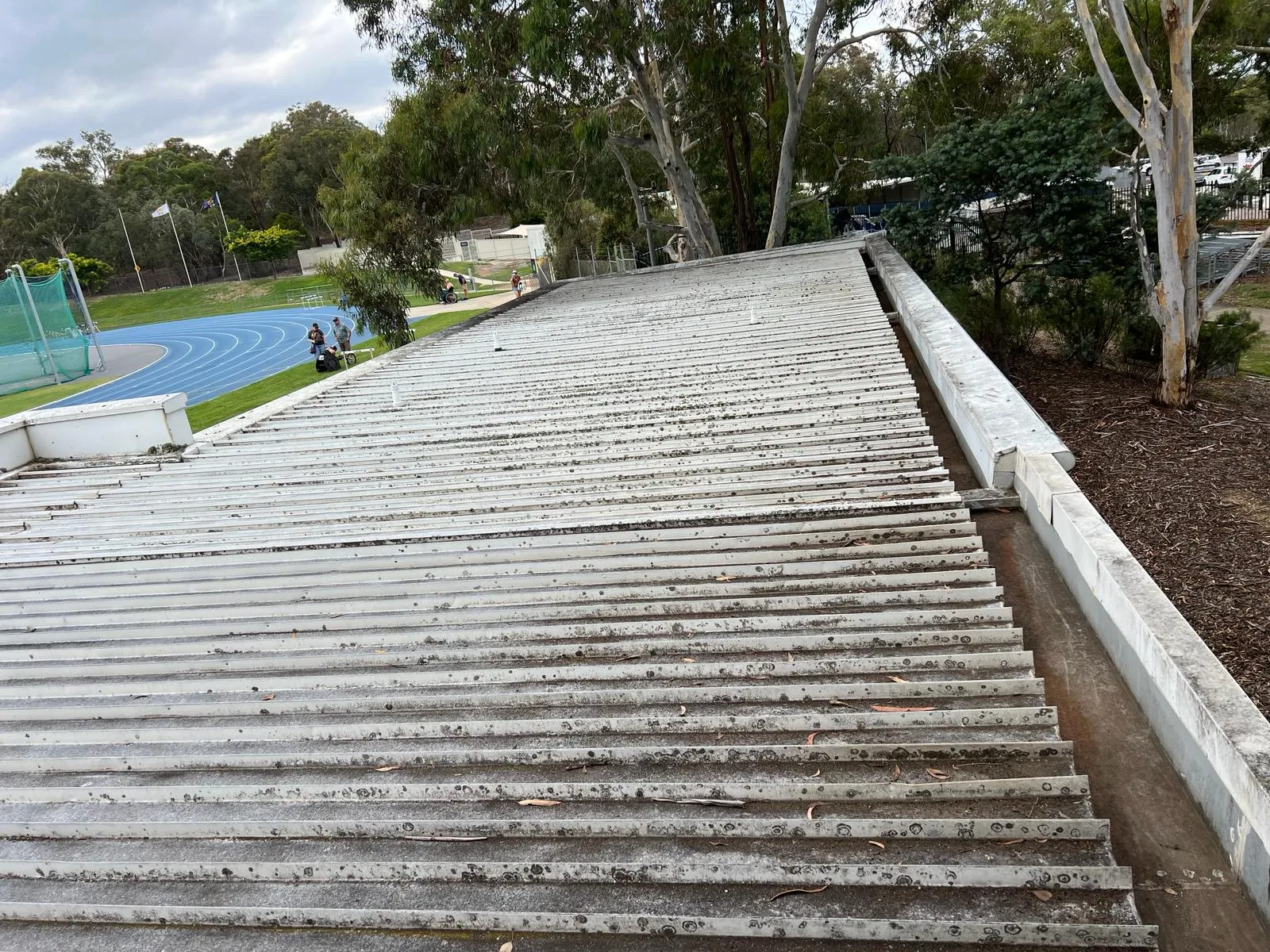
At least twice a year: late autumn after the leaves drop, and early spring (August to September) before bushfire season starts on 1 October. More often under gum trees or pines.

By ACT Gutter Vacuum
Last updated · 12 sources
- 2× a yearLate autumn and early spring
- 3 to 4Cleans a year under gum trees or pines
- 1 OctUsual start of the ACT bushfire season
Clean your gutters at least twice a year in Canberra: once in late autumn, after the deciduous trees have dropped their leaves, and once in early spring (August to September), before bushfire season starts on 1 October. If your house sits under gum trees or pines, plan on three or four cleans a year, because those trees drop leaves, bark and needles all year.
That's the same advice NRMA Insurance gives across the ACT and NSW: clean gutters, downpipes and drains at least twice a year. The rest of this guide explains how to time it for your street, your trees and your part of Canberra.
How your trees change the answer
The trees over your roof decide how fast your gutters fill, and Canberra has two very different kinds.
Deciduous trees (oaks, elms, ash, ornamental pears) drop almost everything in autumn. In the suburbs with the most of them, ACT City Services runs extra street sweeps from April to September to keep up with the leaves. If your street is lined with them, your gutters fill once, heavily, and a clean in late autumn or early winter clears the lot.
Gum trees never stop. Eucalypts drop leaves through the year, with the heaviest fall in summer, and many shed long strips of bark around January. That bark is what jams outlets and downpipes. Under gums, a clean before summer and another after it keeps on top of it.
Where you live in Canberra makes a real difference. From the ACT Government's street tree records:
- Gungahlin and the inner south are mostly deciduous. About three in four Gungahlin street trees are deciduous types, and the inner south's older streets are full of oaks and elms. Autumn is your big clean.
- Tuggeranong and Belconnen are mostly eucalypts, about three in four street trees in Tuggeranong and seven in ten in Belconnen. Your gutters fill steadily, with a peak in summer.
Street trees are only part of it. A big gum or a row of pines in your own yard, or your neighbour's, matters more than the street. Pine needles are the worst of all: they mat into a layer that water can't get through.
Before bushfire season
In the ACT, bushfire season usually runs from 1 October to 31 March, though the Emergency Services Agency can move the dates when conditions call for it. NSW has the same usual dates for its Bush Fire Danger Period, which covers Queanbeyan and the towns around it.
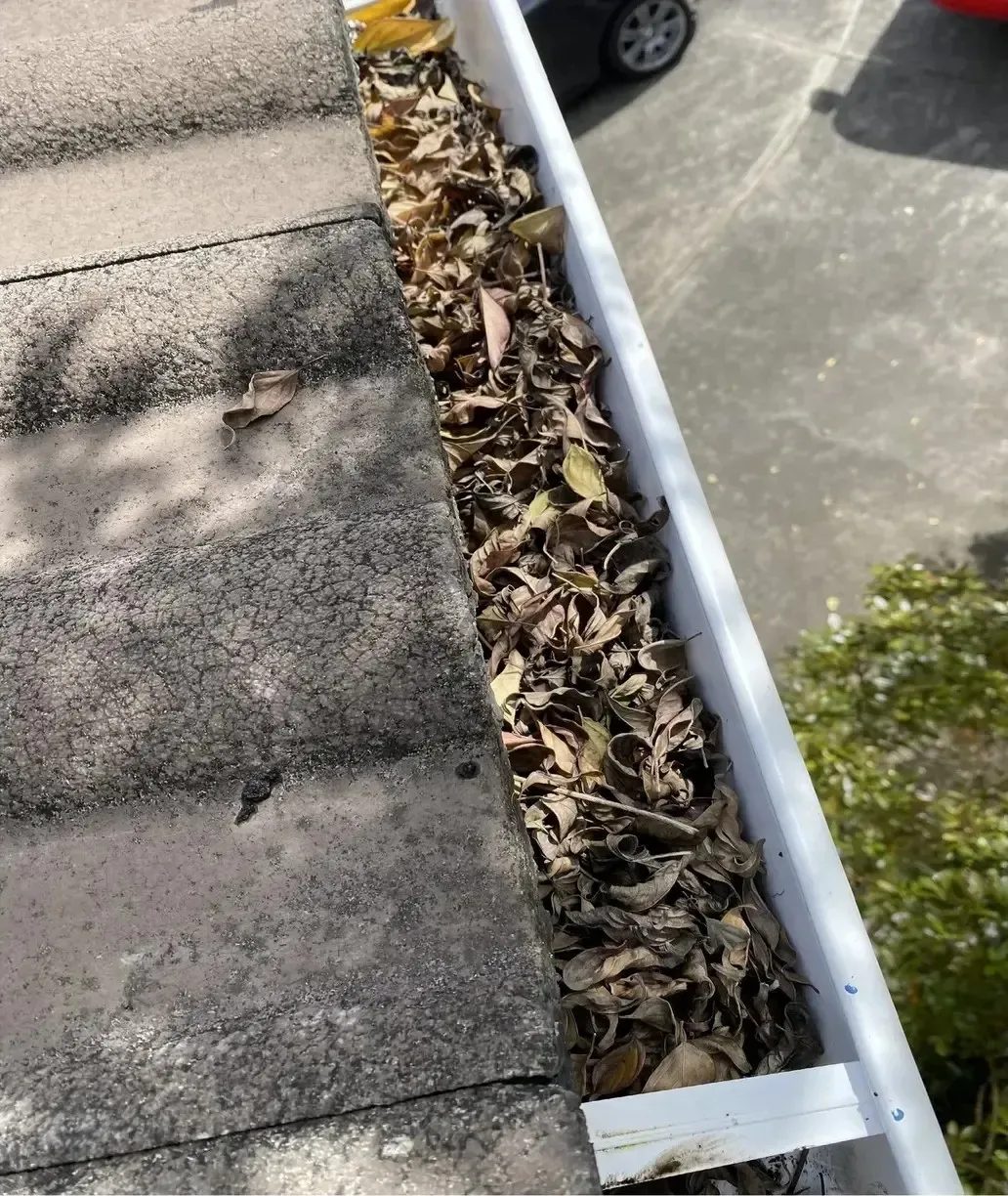
Dry leaves in a gutter are fuel sitting on the edge of your roof. The ACT Emergency Services Agency puts it plainly: dry leaf matter in gutters can allow a fire to spread to the property. Embers blown ahead of a fire are the most common way houses catch alight, and CSIRO's bushfire researchers name leaf build-up in gutters as one of the common ways in.
That's why the early spring clean, in August or September, is the one that matters most. Both the ACT ESA and the NSW Rural Fire Service list clearing leaves from gutters and roofs as one of the first jobs in getting your home ready, and the RFS also suggests metal gutter guards.
It matters most on Canberra's edges. Close to a quarter of all homes in the ACT are in the bushfire prone area, and in some suburbs, such as Kenny and Jacka in Gungahlin, Fadden and Macarthur in Tuggeranong, and Lawson and Macnamara in Belconnen, most of the suburb is inside it. You can check your address on the ACT Government's bushfire prone area map; in NSW, the Rural Fire Service has its own property check. Both are linked in the sources below.
"Dry leaf matter in gutters can allow a fire to spread to the property."
After storms and hail
Canberra's summer storms bring a lot of water in a short time. A gutter that copes with steady rain will overflow when it's half full of leaves and a storm drops its load in twenty minutes.
On 20 January 2020, one of the most severe hailstorms on record in the ACT dropped hail of 4 to 6 cm across the southern half of Belconnen, Acton and the inner south. The ACT Emergency Services Agency had about 2,100 calls for help.
The ACT SES advice for storm season is to clean your gutters, downpipes and drains regularly. After a big storm, it's worth a look even if you cleaned recently: storms strip leaves and twigs off trees all at once.
Signs your gutters need cleaning now
You don't have to wait for the calendar. Clean them sooner if you see any of these:
- Water spilling over the edge in normal rain, not just a downpour.
- Plants growing in the gutter. Seedlings mean there's enough soil and leaf matter in there to hold water.
- A gutter sagging or pulling away from the fascia. Wet leaves are heavy.
- Stains or streaks on the walls or eaves below the gutter.
- A downpipe that stays dry in rain while the gutter above it overflows. That points to a blocked outlet or downpipe.
- Birds or pests nesting in the gutter.
If water is backing up out of the ground at the foot of a downpipe instead, the problem is further down. Our guide to blocked downpipes explains how to tell where the blockage is.
Do gutter guards change the answer?
They stretch it out, but they don't remove it. A metal mesh guard keeps most leaves and bark out, so the gutter stays clear for longer. Fine debris, dust and bits of leaf still get through or sit on top, and they need clearing now and then.
For a house under big gums, guards can turn three or four cleans a year into one check and a clean when needed. In the bushfire prone edge suburbs they also do a second job: the ACT ESA and the NSW RFS both suggest metal leaf guards to keep dry leaves out of the gutter. If you're weighing them up, our page on gutter guard installation covers the options.
How we clean them
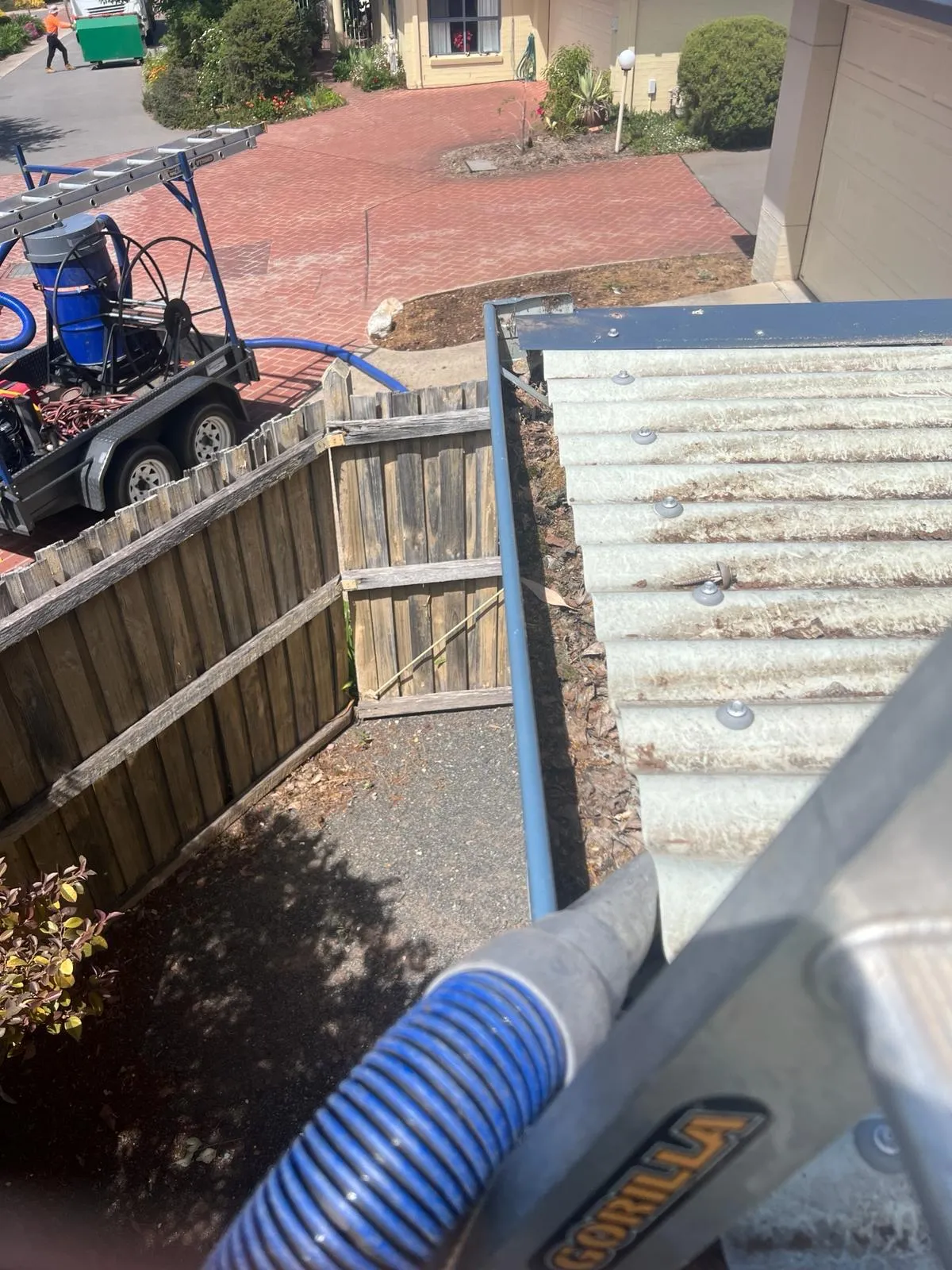
We clean gutters with an industrial gutter vacuum. The leaves and sludge go up a hose into the machine, not over the edge onto your garden, and we can clean many gutters from the ground. We check each downpipe is draining, and you get before and after footage and a roof report.
Gutter cleaning with us starts from $190 for a single storey home and $429 for a double storey. If you're not sure how often your place needs it, ask when we're there: we see what's in your gutters and can tell you whether twice a year is enough.
Frequently asked questions
For a house with no trees nearby, sometimes. Most Canberra homes have street trees or their own trees close enough to fill the gutters, and one clean a year leaves them full through either the leaf drop or the fire season. Twice a year covers both.
It usually runs from 1 October to 31 March. The ACT Emergency Services Agency can start it earlier or end it later when conditions call for it. In NSW, including Queanbeyan, the Bush Fire Danger Period has the same usual dates.
No. Guards keep most leaves out, but fine debris, dust and bark still get through or sit on top. Gutters with guards usually need a check and a clean less often, not never.
Single-storey gutters you can reach safely from a ladder, yes. Work from a stable ladder on flat ground, never alone, and stay off steep or wet roofs. Two-storey gutters and steep roofs are where most people call us.
Sources
- ACT Emergency Services Agency, Bushfires: bushfire season dates and the share of homes in the bushfire prone area.
- ACT Emergency Services Agency, Be Bushfire Ready flyer 2023-24: "Dry leaf matter in gutters can allow a fire to spread to the property."
- ACT SES, StormSafe: Prepare your home.
- ACT Government, Bushfire prone area map.
- NSW Rural Fire Service, Bush Fire Danger Period and Prepare your property.
- NSW Rural Fire Service, Check if you're on bush fire prone land.
- Country Fire Authority (Victoria), Ember attack.
- CSIRO, Raising hope out of ashes of the Tathra bushfire.
- Bureau of Meteorology, ACT Annual Climate Summary 2020.
- Australian Institute for Disaster Resilience, Hailstorm, ACT, January 2020.
- ACT City Services, Street sweeping.
- NRMA Insurance, Wear and tear.
Due for a gutter clean?
Get your spring clean done before 1 October. Gutter vacuum cleaning from $190, and every clean includes downpipe clearing, a full roof report and before and after footage.